Observe
See the whole scene before naming the symptom.
○
A FIELD METHOD FOR ORNAMENTAL GARDENERS
A calmer way to read the scene, make the next safe move, and return with evidence.
THE BEDSIDE SIX
Before a faster answer, there is a better sequence. The Bedside Six turns a changed scene into six small decisions that protect the evidence.
See the whole scene before naming the symptom.
○Separate what changed from what was already true.
⌁Check one condition that could change the story.
⊙Make the smallest useful move.
+Return on purpose, not just when worried.
↺Hand off a cleaner question when it gets bigger.
↗FREE PRACTICE / 01
Use the scene sentence to slow the leap from “this looks wrong” to “I know what caused it.” It is the smallest piece of writing that can change your next move.
Try the scene sentence
“On the lower leaves of the plant beside the path, I can see ___; the change is ___; the surrounding soil is ___.”
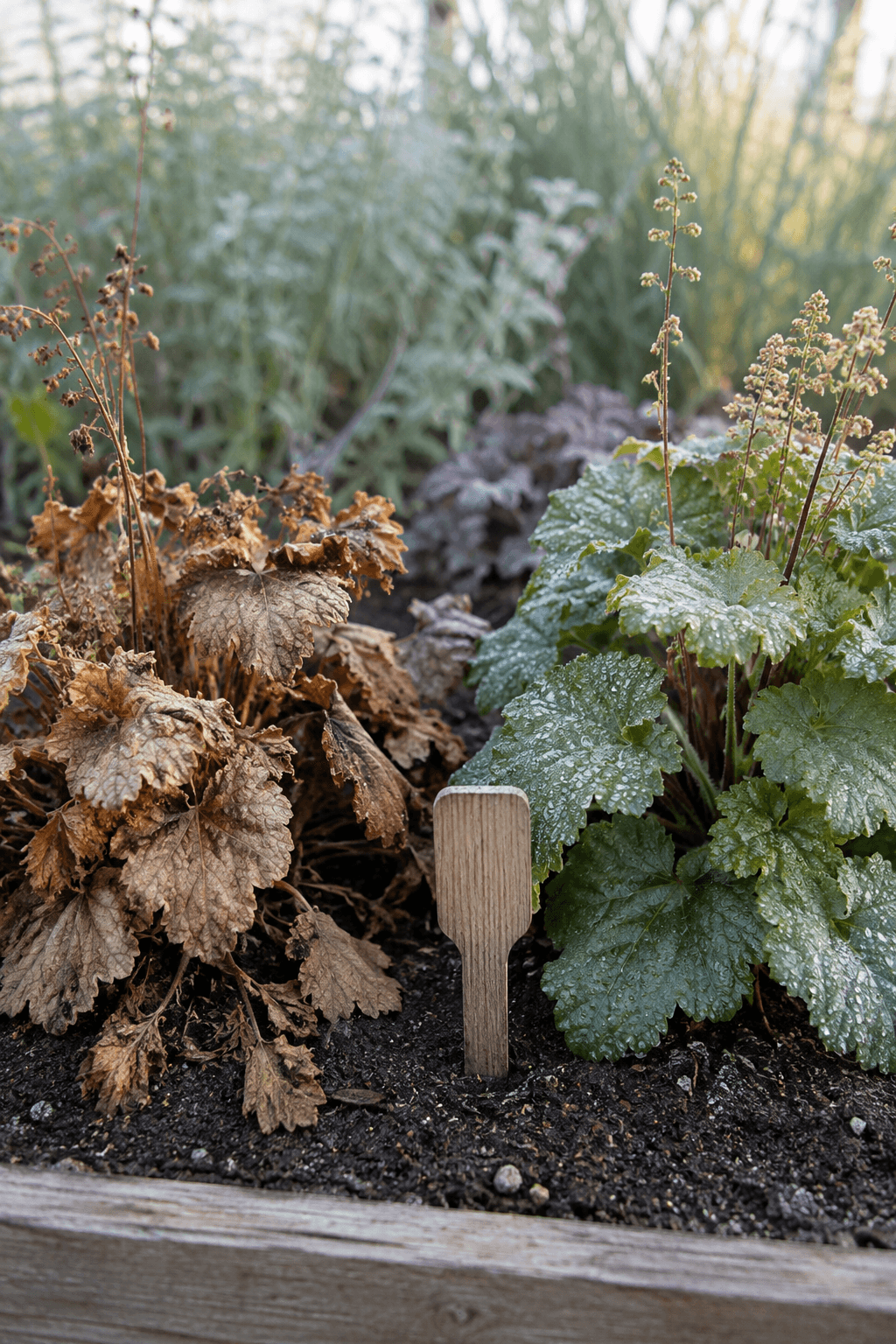
What is different—and what only feels urgent?
The bed is not a photograph. It is a history.
A second look becomes information.
NOT A WORKSHEET LIBRARY
Designed to be used beside a plant, on a phone, or with muddy hands. Each card makes the next decision easier to see.
Record the place, pattern, timing, and one condition before you act
Open toolPut the changed plant beside the nearest useful comparison
Open toolChoose the next observation window before you leave the bed
Open toolKnow when the question needs local expertise, a label, or a lab
Open tool
THE BEDSIDE SIX / FIELD EDITION
This is not an encyclopedia of diagnoses. It is the habit that makes every diagnosis source more useful: arriving with a cleaner question, a bounded observation, and a safer next move.
RESPONSIBLE BY DESIGN
The method is decisive about process and modest about diagnosis. It helps you see what to check, what to record, and when to hand a question to the right local source.
Symptoms are clues, not verdicts.
Context, history, water, light, timing.
Labels, local extension guidance, labs, and qualified professionals remain authoritative.
THE BEDSIDE SIX
A quiet, beautiful field guide for the moment before action—and the confidence that comes from returning with evidence.
Get the field guide Read the method again ↺